


GUIDANCE TO ASSIST THE SWIMMER REACH THEIR FULL POTENTIAL
I get asked by lots of parents and have done so for numerous years 'how many swimming sessions should their child be doing per week.' So to assist you, I have done the below chart as a guide. All the top swimmers that the club have produced over the last 15 years have adhered to this guide, which falls in line with British Swimming 'Long Term Athlete Development' (LTAD). Its basic principal is based on an increase in swimming sessions and strength and conditioning (gym) sessions as the swimmer gets older.
However in practice and experience what swimmers and parents tell you what they will attend and what they actually do, is vastly different. If the swimmer wants to reach their true potential and hopefully become a National swimmer. It's about consistency every week despite other activities, doing the prescribed amount of sessions week in week out. If you miss one session because of a school parents evening, make it up by coming to another session, CONSISTENCY !! One of the reasons why registers are taken is pure and simple, to see the consistency of the attendance of the swimmers. Ear ache - do kick with their head out of the water, knee problems - do pull. Ive heard all the excuses over the years but the swimmers that succeed to the highest level make sacrifices in their personal life to make sure they make the sessions.
There are only a few competitions that the swimmers will be rested for within the training pool. They are County, North West and National Championships. That means generally before open meets and in particular micro league, echo cup, arena league galas there should be no resting and no reduction in training hours. The sport is long term and not a about a 25m relay in a junior league match.
Morning training should be introduced commencing at 10yrs on a few occasions. When do the swimmers compete at championships or open meets ? Generally its in the morning or afternoon and rarely in the evening. So train when you compete so your body is use to it. This, along with the philosophy of train when your tired and not when your fresh - then once rested the swimmer will notice the difference and swim fast. So learn to swim twice in a day, all the best swimmers do.
The below is only a guide and a lot will depend on the biological age of the swimmer rather than chronological age. The older biologically the swimmer is the more work is needed.
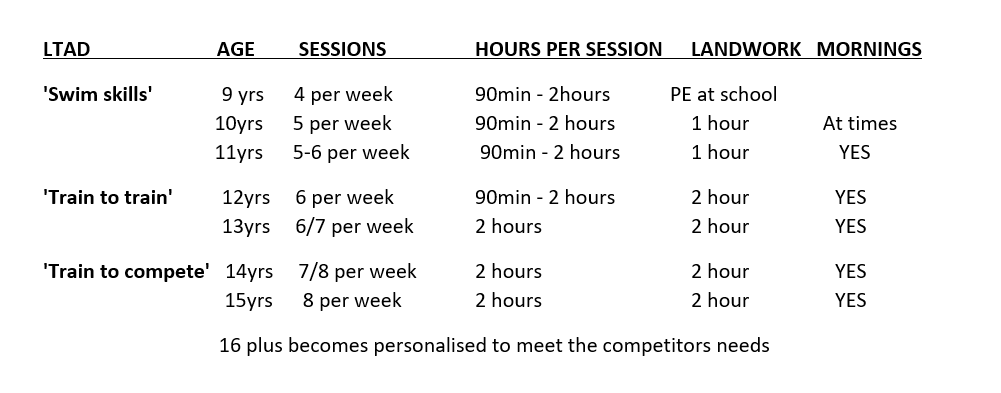
Taking the above as a model, a lot of swimmers who want and try to achieve in the sport, fall well short of the above quotas. Again it's the consistency throughout a 48 week year, September - July
Mark Patrickson - Head Swimming Coach
